
The Co-Design Imperative: Why Solving With Communities Outperforms Solving For Them

How Co-Discovery, Trusted Intermediaries, and a Listening-First Approach Transformed 988 Outreach for High-Risk Workforce Populations in Georgia
Nothing for the People Without the People
By Brian Tolleson
Anyone who has spent time in public health knows the phrase: Nothing for the people without the people. It predates current political sensitivities. It has nothing to do with the contested vocabulary of any particular administration's priorities. It is, at its core, a strategic principle — one grounded in evidence, earned through experience, and validated again and again by the communities it serves.
The argument here is straightforward: organizations that co-design solutions with the populations they aim to serve — rather than simply designing solutions for them — consistently unlock deeper trust, greater reach, and an unexpected dividend in the policy arena. This is not idealism. It is the most practical framework available for doing complex public health work in communities that have every reason to distrust outside voices.
Listening First: What We Learned from Construction Workers and Restaurant Teams
In Georgia, Lexicon Strategies worked closely with the construction and food service industries as part of a broader campaign activation strategy supporting 988 — the national mental health and crisis lifeline — designing communications tailored to high-risk workforce populations. Central to that effort was a strategic insight developed in partnership with Ashley Fielding, then Georgia DBHDD's Assistant Commissioner for Agency Affairs: that CDC workforce data could serve as a key determinant of risk and need for 988 outreach.
The data behind this focus is sobering. Construction workers have one of the highest suicide rates of any occupational group in the United States. The Centers for Disease Control and Prevention, the Georgia Department of Public Health, and the National Center for Health Statistics have all documented this risk in converging terms. A special report issued by the Georgia Department of Public Health — Suicides among Workers in Food Preparation and Serving Occupations, Georgia, 2017–2021, drawn from Georgia Vital Records — confirmed that food service workers face an elevated and measurable burden of suicide mortality within the state. Nationally, CDC data and the National Vital Statistics Reports (Volume 72, Number 7, August 2023), which examined drug overdose mortality by usual occupation and industry across 46 U.S. states and New York City, further document the compounding risks facing workers in these industries — including elevated rates of overdose death tied to irregular hours, economic precarity, high turnover, and frequent occupational exposure to substance use environments.
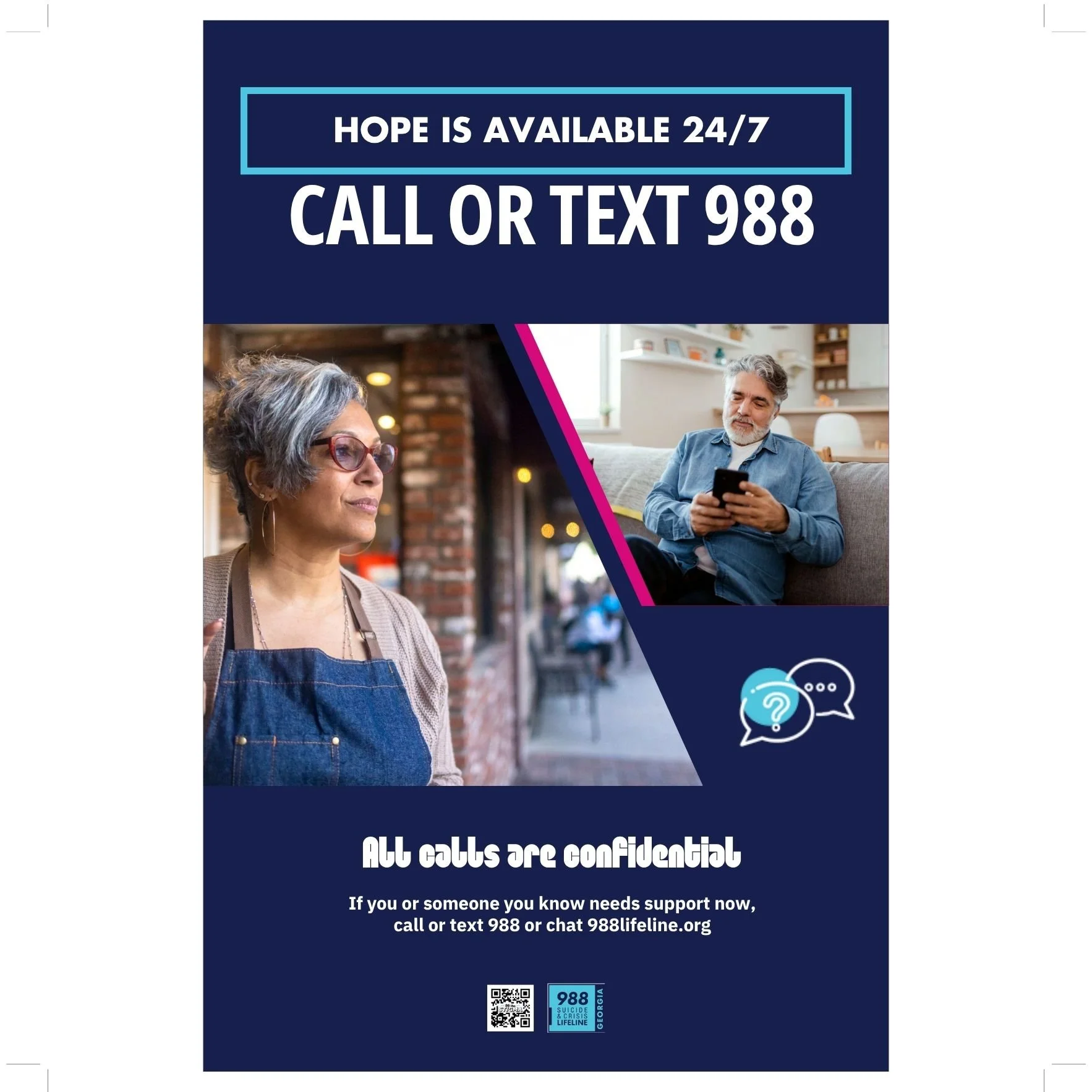
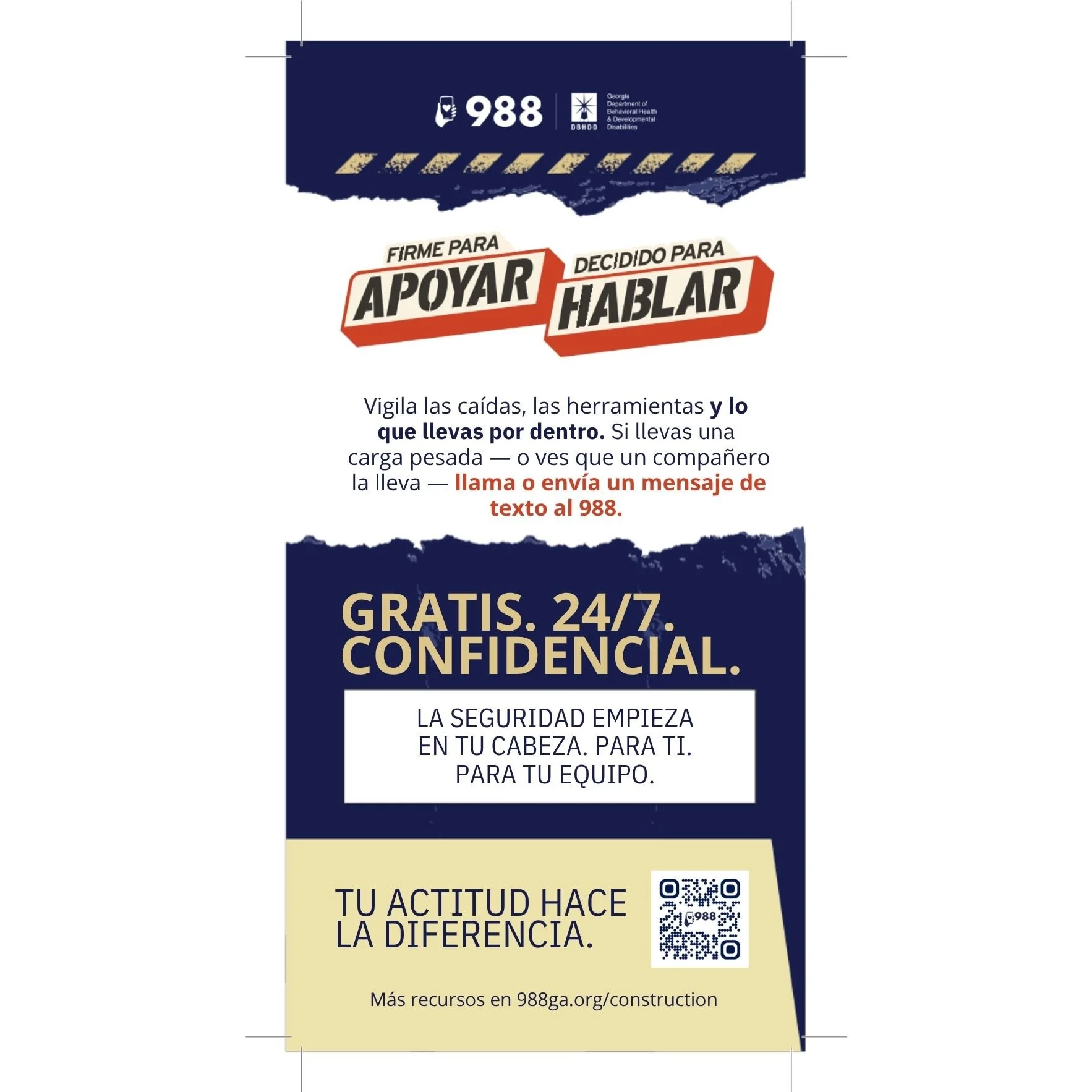
Guided by Lexicon's Plan. Partner. Program. Prove™ model, before a single message framework was developed or a single campaign asset was designed, the work began with listening sessions. The conversations were structured around four core questions: Does this community want our help? How do they want us to be helpful? How do they not want us to engage? And are there opportunities to co-discover solutions together? These were not rhetorical gestures. The answers shaped everything that followed.
What emerged from those conversations was a portrait of communities with strong internal cultures, well-defined trust hierarchies, and acute sensitivity to being patronized. Construction workers, in particular, operate in environments where showing vulnerability can carry real professional and social risk. Any message that fails to acknowledge that reality — that tries to layer external clinical language onto a culture of physical toughness and self-reliance — will be perceived not as help, but as foreign interference. The stigma would increase, not decrease.
Co-Discovery in Action: From Sharpies to Porta-Potties
Co-discovery is not a focus group. It is an ongoing, iterative collaboration where community knowledge is treated as expert knowledge. In practice, this means asking unconventional questions and being prepared to receive unconventional answers.
Here is one: what is the single most in-demand consumable item in a restaurant kitchen? The answer, surfaced directly from food service workers and operators, is a Sharpie. Permanent markers are essential tools — for labeling, dating, logging, tracking. They move through every station, every shift. That insight led to one of the most cost-effective earned media placements imaginable: branded 988 Sharpies, distributed through industry partner channels, carrying the crisis line number directly into the hands of workers dozens of times each shift. The marker is not an ad. It is a utility. And utilities get used. Thousands of 988 Sharpies have been distributed and are now in active use across more than 300 restaurants, with additional distribution continuing to roll out on construction job sites.
For construction workers, the co-discovery process identified a channel that no media plan would have surfaced: the porta-potty. Workers visit porta-potties multiple times a day. The space offers a rare moment of physical privacy on a job site — and sometimes, that moment of solitude is also a moment of acute personal crisis. Porta-potty interior walls are, functionally, empty media space. Placing 988 information there is not gimmicky. It is precise. It meets the person exactly where they are, at the moment when the message may matter most. These solutions were not invented in a conference room. They were co-created with the people who know the terrain.
The Trust Multiplier: How Partner Organizations Become More Powerful, Not Less
Some organizations approach community partnership as a risk to manage — a process that might slow things down, complicate messaging, or create obligations they are not prepared to fulfill. This is a category error. Genuine partnership does not dilute an organization's authority. It multiplies the trust of every organization in the network.
In the Georgia initiative, leading trade associations — including construction and food service industry bodies — became the primary channel of delivery for 988 outreach materials, training resources, and campaign content. Their endorsement was not incidental. It was foundational. For a construction worker who has spent a career in an environment shaped by union culture, employer relationships, and industry norms, a message that arrives through the Associated General Contractors of Georgia carries a fundamentally different authority than one that arrives through a state agency or a healthcare system. The messenger is the message.
The benefit flows in both directions. When trade associations serve their members in a new and substantive way — by equipping them with mental health resources, crisis tools, and industry-specific data about workforce risk — they deepen their value proposition to those constituents. The organization becomes more trusted, which extends the reach and effectiveness of every subsequent communication through that channel. This is not a transactional relationship. It is a logic model built on mutual capacity building.
When Communities Become Allies: The Policy Dividend of Genuine Partnership
There is a downstream effect of authentic community partnership that rarely appears in program design documents but that practitioners observe consistently: political and policy influence accrues to those who have done the genuine work.
In Georgia, the mental health policy landscape has been meaningfully shaped by the participation of construction and food service industry advocates — both sectors that carry significant lobbying weight in the state legislature. That influence did not emerge from outreach or persuasion campaigns directed at policy makers. It emerged from the fact that the organizations representing those industries had been educated, engaged, and activated around workforce mental health risk through legitimate, community-grounded partnership. When they walked into legislative meetings, they were not doing a favor for a health initiative. They were advocating for their own members, with data and direct experience to back them up.
This is the policy dividend of genuine community engagement. Organizations that design solutions *with* communities — rather than deploying solutions *at* them — build constituencies that show up when it matters. Supporters, not detractors, are what determine whether a policy initiative survives its first legislative session.
Lessons for Public Health and Community Impact Practitioners
1. Ask all four questions before designing anything.
Does the community want help?
How do they want it?
How do they not want it?
What can you co-discover together?
These are not preliminary courtesies. They are the design brief.
2. Treat community knowledge as expert knowledge.
The Sharpie insight did not come from a strategist. It came from someone who works a line shift. Build processes that surface that knowledge systematically.
3. Identify trusted intermediaries and build their capacity.
Trade associations, faith communities, and civic organizations are not just distribution channels. They are credibility infrastructure. Invest in making them stronger.
Lexicon Strategies Co-founder Brian Tolleson was previously CEO of the National Center for Civil and Human Rights, founder of renowned advertainment studio BARK BARK, and former Marketing and Creative executive at Viacom.
Brian has spent his career working at the intersection of human rights, media and social justice while managing billions in partnership marketing initiatives, multi-platform branding and content strategy for distributors like Sony, NBC Universal, and Google, as well as marketers such as P&G, Unilever, Clorox, Chase, Target, Microsoft, Starbucks, Mercedes Benz, Chevron and General Motors.